
Myrtle
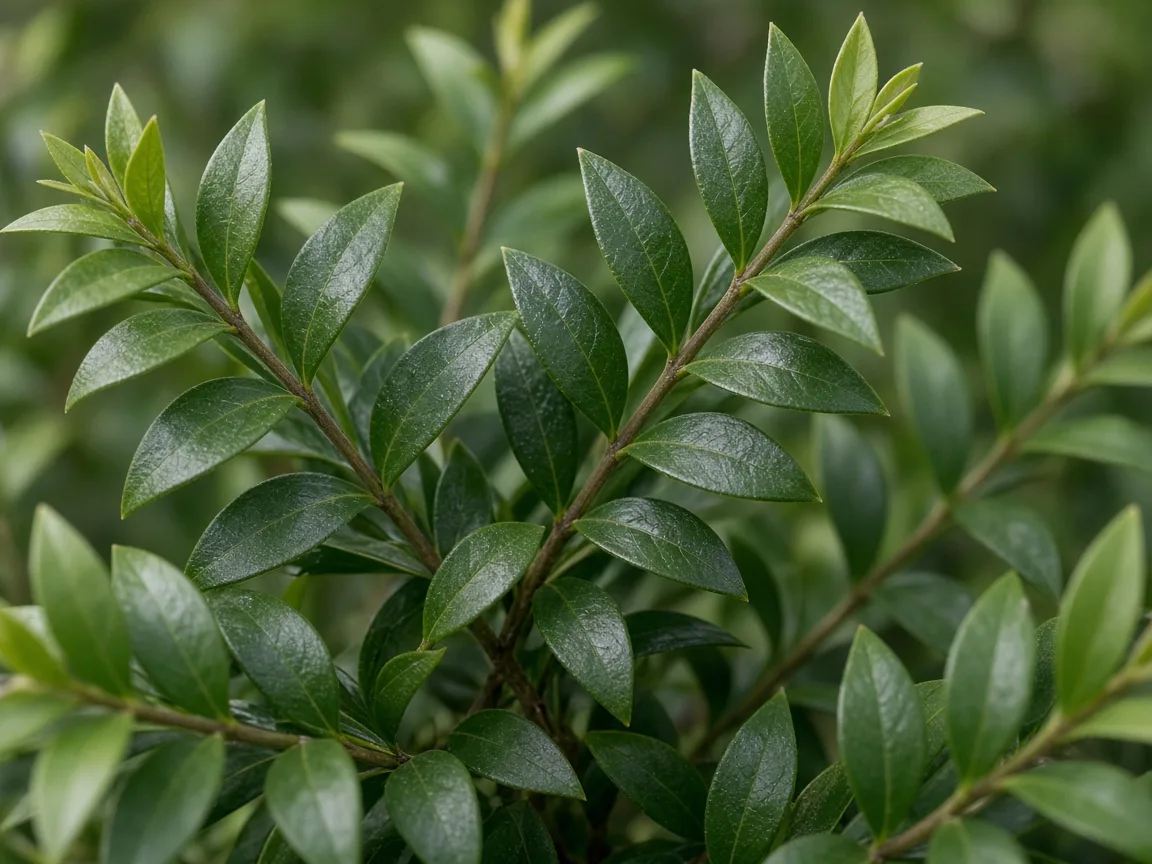
Myrtle is the fine, glossy greenery that gives a bouquet a polished, almost precious look: small, dark green, shiny, pointed leaves packed along supple stems, with a light aromatic scent when crushed. It’s a classic green for bridal bouquets and elegant designs, but it also slips easily into everyday arrangements. On FlowersEzGo, a local florist works it into designs that need finesse and staying power, then hand-delivers to the address you enter. This page explains why florists choose it, how to recognize it, and how to keep it looking good at home.
What is myrtle in floristry?
Common myrtle (Myrtus communis) is an evergreen shrub native to the Mediterranean. It belongs to the same botanical family as eucalyptus, the Myrtaceae, which explains its fresh, resinous scent when a leaf is crushed. Its small, oval leaves grow in pairs and are a deep, shiny green; some florist varieties have even tinier leaves or cream variegation.
It’s easy to tell apart from eucalyptus, with larger, rounder, often silvery leaves, and from Italian ruscus, with longer leaves spaced along arching stems. Salal offers large round leaves for structure; myrtle brings a fine, dense, even texture that’s ideal for finishing touches.
It isn’t a flower to gift alone — it’s trade greenery. Because a local florist works from that day’s delivery, the myrtle variety, leaf size, or stem length can vary slightly while still matching the style and price you selected on FlowersEzGo.
Design roles and good companions
Florists use myrtle to:
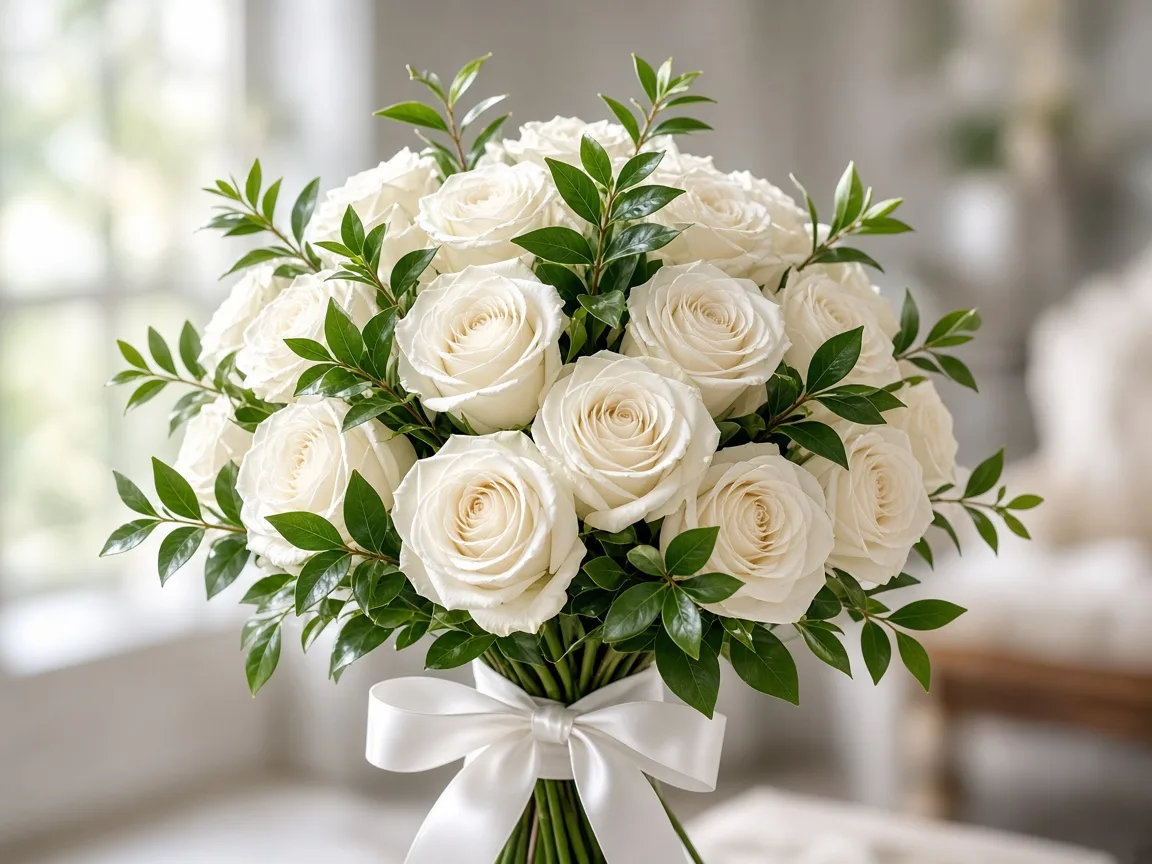
- frame a round rose bouquet with a fine, neat green collar;
- fill gaps between blooms without weighing the design down or hiding the heads;
- make boutonnières, flower crowns, and small delicate bouquets;
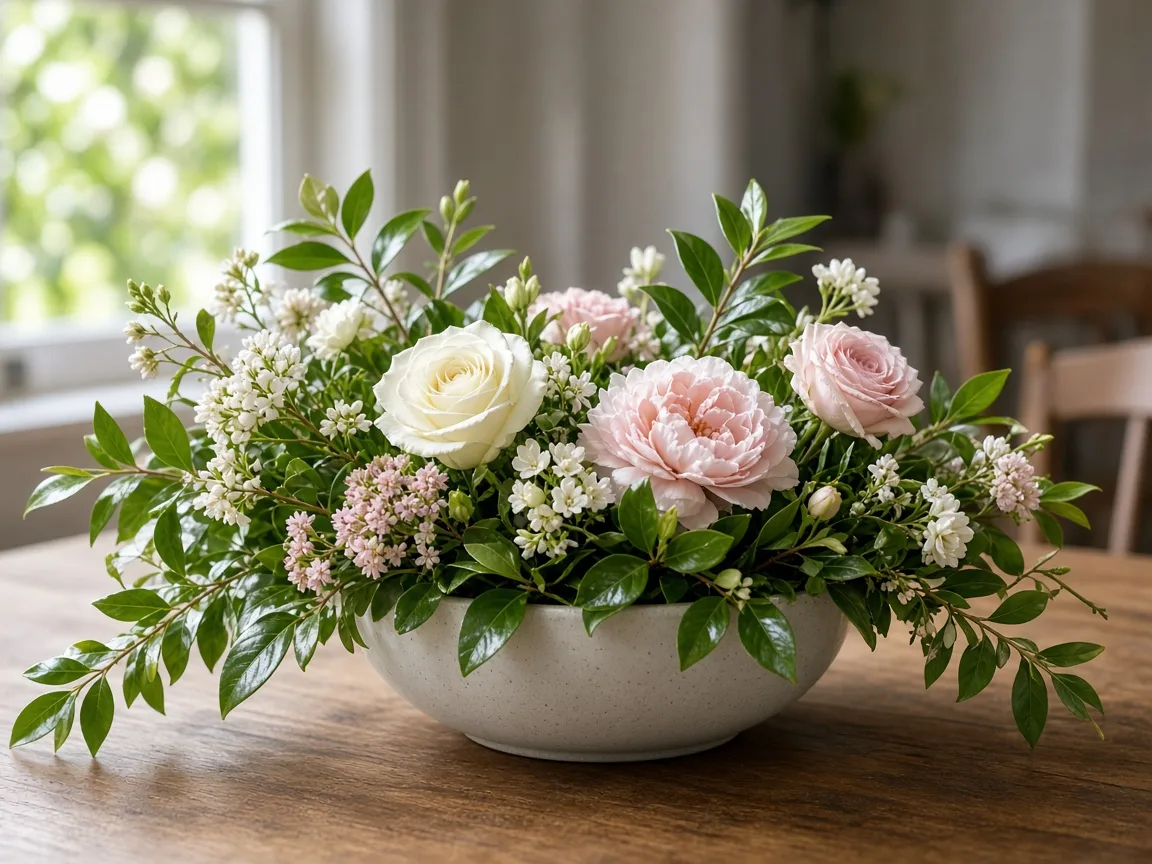
- build low, even, glossy centrepieces that stay beautiful for a long time.
It pairs especially well with white, pale pink, or red roses, baby’s breath, waxflower, white pompons, oriental lilies, and snapdragons. For a more silvery, fragrant green, compare with seeded eucalyptus; for longer leaves and more supple stems, Italian ruscus; for lacy fronds, leatherleaf.
Occasions and messages
Weddings. Since antiquity, myrtle has symbolized love and marriage: it was associated with Aphrodite, goddess of love. The tradition continues today — since the 19th century, brides in the British royal family have tucked a sprig of myrtle into their bouquets. Bridal bouquets, boutonnières, centrepieces: this is its signature occasion.
Anniversaries and romance. In a rose bouquet, myrtle adds a quiet nod to lasting love.
New baby and christenings. Fine and bright, it beautifully accompanies white and pale pink bouquets for life’s big firsts.
Sympathy. Evergreen myrtle brings a sober, elegant note to condolence arrangements and all-white tributes.
Elegant everyday gifts. In a seasonal bouquet, it adds a polished finish that makes a difference.
If you want an explicitly bridal or very refined look, filter for designs that feature myrtle in the FlowersEzGo catalog.
Care tip after delivery
Give stems a light recut if the bouquet is in a vase and keep the water clean, refreshing it every two days. Remove any leaves sitting in the water. Keep the arrangement cool, away from radiators and direct sun. If the design is built on floral foam, add a little water every two days to keep it moist. An occasional light misting helps the leaves stay shiny. With good care, myrtle often lasts two weeks or more, usually longer than the flowers around it.
Pets: common myrtle (Myrtus communis) is not on the ASPCA’s list of toxic plants. Don’t confuse it with periwinkle (Vinca), sometimes called “creeping” or “running myrtle,” which is toxic. Like any plant, myrtle can cause mild stomach upset if chewed, so keep the bouquet out of reach of curious pets.
Ordering arrangements with myrtle on FlowersEzGo
Browse products linked to this type (catalog module), choose date and address, add your message, and confirm. Same-day delivery appears depending on the area and cutoff. A partner florist designs and hand-delivers — greenery is part of the craft.
Tip: if the photo shows small, very shiny dark green leaves packed in pairs along the stem, you’re probably looking at myrtle. Round, silvery leaves usually mean eucalyptus; long pointed leaves spaced along an arching stem, Italian ruscus.
Questions & answers — myrtle
Is myrtle a flower?
No — in floristry it’s a fine, glossy greenery used to frame, fill, and finish bouquets.
Why is myrtle associated with weddings?
Since antiquity it has symbolized love and marriage. British royal brides have carried a sprig in their bouquets since the 19th century.
Does myrtle have a scent?
Its leaves give off a fresh, aromatic scent when crushed, subtle within a bouquet.
What’s the difference between myrtle and eucalyptus?
They’re in the same family, but myrtle has small, shiny dark green leaves; eucalyptus has larger leaves that are often round and silvery.
How long does myrtle last?
Often two weeks or more with clean water and a cool spot, frequently longer than the flowers in the bouquet.
Is myrtle toxic to pets?
Common myrtle is not on the ASPCA’s toxic plant list, but chewing it can cause mild stomach upset. Keep it out of reach.
Is same-day delivery available?
When the area allows and you order before the cutoff shown at checkout.