
Israeli Ruscus
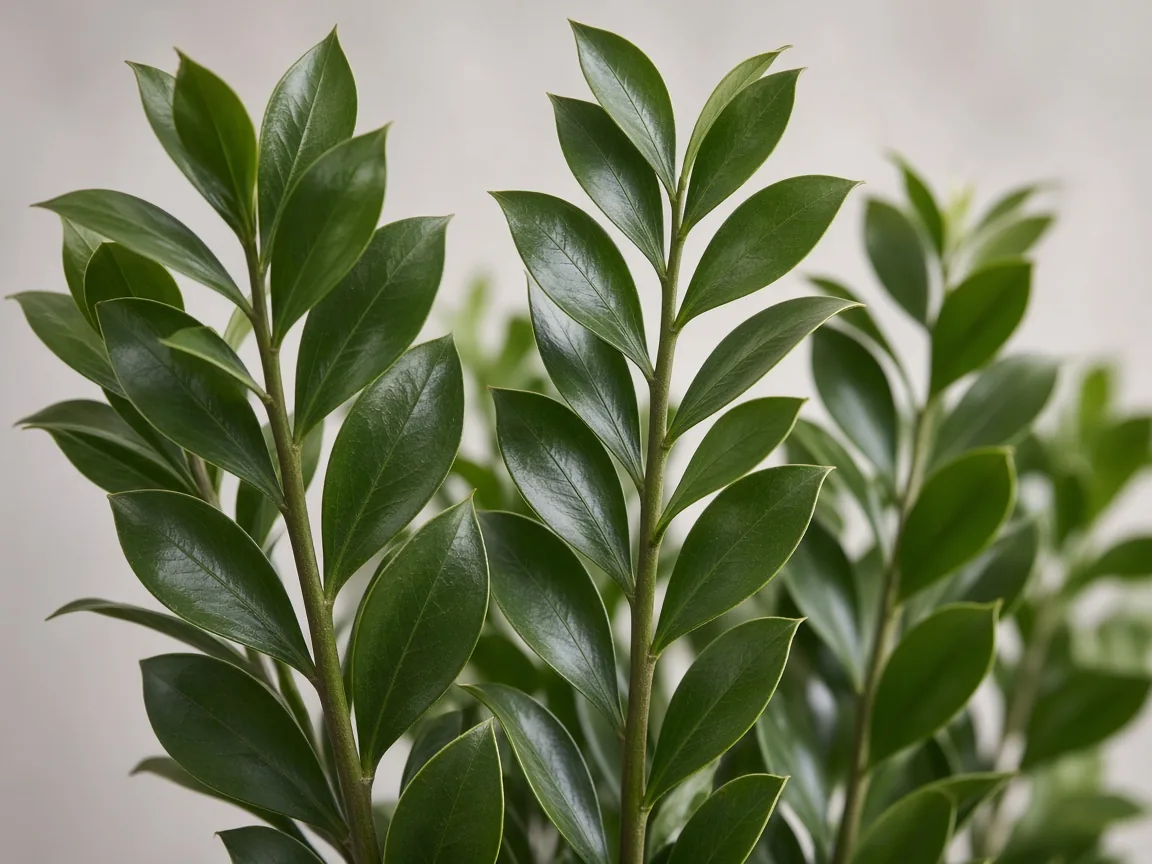
Israeli ruscus (Ruscus hypophyllum) is a florist green with firm, upright stems lined with glossy, dark green, oval pointed “leaves.” It structures a bouquet, extends its lines, and is one of the longest-lasting cut greens. On FlowersEzGo, a local florist selects fresh greenery, builds the style you picked, and hand-delivers to the address you enter. This page explains what Israeli ruscus is, how florists use it, and how to care for it.
What is Israeli ruscus?
Ruscus hypophyllum is an evergreen plant in the asparagus family (Asparagaceae), native mainly to northwest Africa and probably southern Spain. It’s called “Israeli” because it’s grown commercially in Israel, as well as in Florida and Colombia, and sold notably at the Dutch flower auctions.
Botanical curiosity: what look like leaves are actually cladodes, flattened stems that do the job of leaves. They grow up to about 8 cm long, on unbranched stems that can reach close to a metre.
It differs from Italian ruscus (Batch 5), with finer, longer leaves and a softer habit, and from butcher’s broom (Ruscus aculeatus), with smaller, spiny cladodes.
Formats, pairings, and look
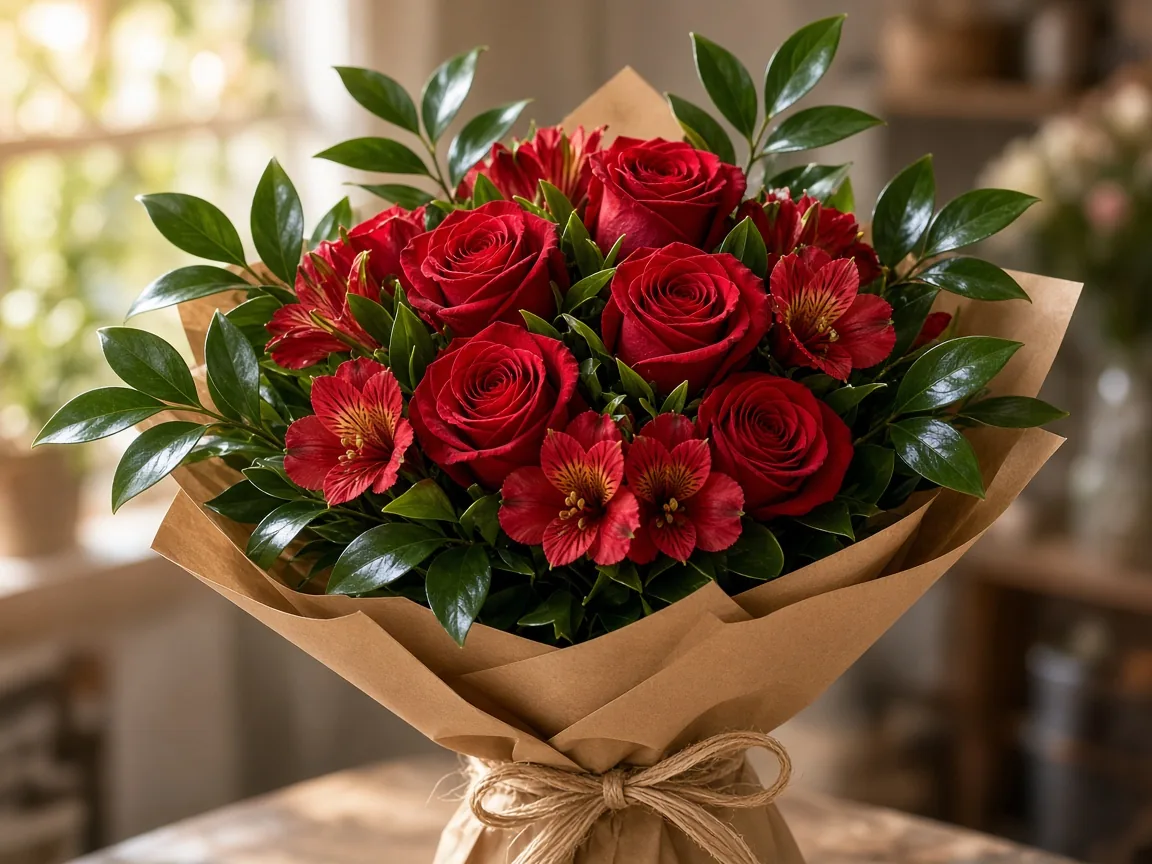
Florists use Israeli ruscus as a line element to add height, as a green base in a round bouquet, or as filler in centrepieces and sympathy arrangements. Its firm stems hold their place well, even in a dense design.
It pairs especially well with:
- roses in every colour and red alstroemeria (this batch);
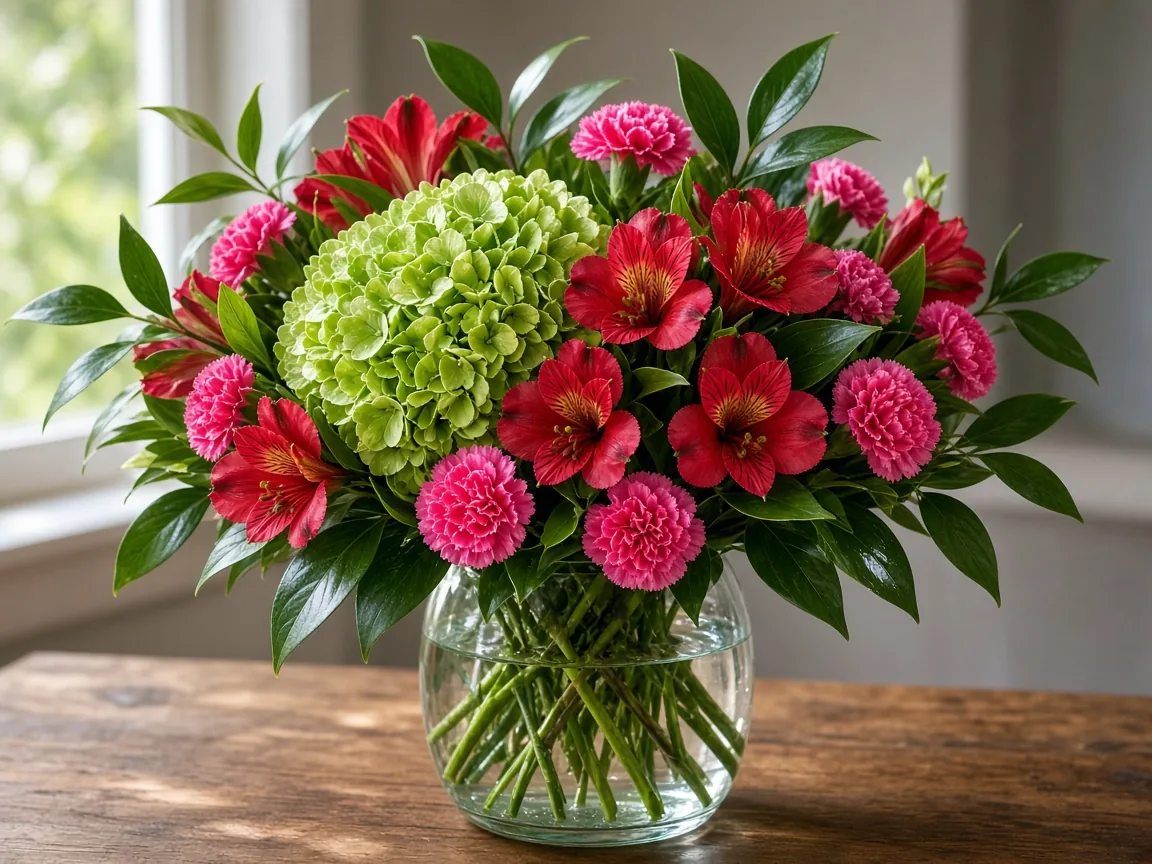
- green hydrangea (this batch) or white hydrangea (Batch 17), for a full look;
- hot pink mini carnations (this batch) and the other carnations;
- other greens such as Italian ruscus (Batch 5), salal (Batch 3), or seeded eucalyptus (Batch 4).
Because a local florist builds from that day’s delivery, stem length and the amount of greenery may vary, while still matching the style and budget you selected.
Why choose an arrangement with Israeli ruscus
Outstanding vase life. Israeli ruscus often outlasts the flowers it accompanies; you can keep it in the vase after the blooms are spent.
A clean line. Its straight stems add height and a polished silhouette.
Holiday season. Its deep, glossy green makes it a classic Christmas green.
Contrast. Its dark green makes red, hot pink, and white flowers stand out.
How Israeli ruscus evolves in the vase
According to a University of Florida (UF/IFAS) fact sheet, Israeli ruscus stems typically last a month or longer in arrangements. Over time, a few cladodes may yellow: simply remove them to keep the design neat.
Care tip after delivery
Remove the wrap, recut stems about 2 cm, and strip cladodes that would sit in water. Place the bouquet in a clean vase with fresh water and change the water every two days. Keep the vase away from direct sun, radiators, and warm drafts. When the flowers fade, keep the ruscus and add a few fresh stems.
Pets: ruscus is not on the ASPCA plant list, and we have no reliable data confirming it is safe. To be careful, keep the bouquet out of reach of pets that chew.
Buying arrangements with Israeli ruscus on FlowersEzGo
Browse the arrangements below (catalog module), choose the date and full address, add a card message, then confirm. When the area allows, same-day flower delivery appears at checkout before the cutoff. A partner florist prepares and hand-delivers.
Budget tip: a round bouquet trimmed with ruscus for a classic gesture; a generous bouquet where greenery adds volume; a centrepiece or sympathy arrangement for an event. Taxes and delivery show before payment.
Also explore red alstroemeria, green hydrangea, and hot pink mini carnations (this batch), and the other greenery pages already published. City pages confirm local context — they never replace the exact address at checkout.
Questions & answers — Israeli ruscus
Why is it called Israeli ruscus?
Because it’s grown commercially in Israel (as well as in Florida and Colombia). The plant itself is native mainly to northwest Africa.
How is it different from Italian ruscus?
Israeli ruscus has broader, oval “leaves” on firm, upright stems; Italian ruscus (Batch 5) has finer, longer leaves and a softer habit.
Are those really leaves?
No. They are cladodes, flattened stems that look like leaves and do their job.
How long does Israeli ruscus last?
It typically lasts a month or longer in arrangements, often outliving the flowers. Change the water regularly and remove yellowed cladodes.
Is ruscus dangerous for cats and dogs?
Ruscus is not on the ASPCA list and we have no reliable data confirming it is safe. To be careful, keep the bouquet out of pets’ reach.
Is Israeli ruscus good for Christmas?
Yes. Its glossy dark green is a classic green for Christmas arrangements and winter tables.
Can I get an arrangement with Israeli ruscus delivered today?
Yes, when same-day delivery is available for the address and you order before the cutoff shown at checkout.